
A New Dawn for Mother and Child
- home //
- News details
A New Dawn for Mother and Child
<pre>
<strong>Hon. Sarah Cleto Rial Unveils Historic Maternal and Newborn Health Initiative at National Health Summit 2025</strong></pre>
<hr />
<p> </p>
<p><strong>JUBA, SOUTH SUDAN</strong> — The air inside the main plenary hall of the 2025 National Health Summit was charged with a palpable sense of history and urgency as Day 3 proceedings commenced. In front of a diverse assembly of state health ministers, international donors, frontline medical workers, and civil society leaders, the Minister of Health, Hon. Sarah Cleto Rial, took the podium to inaugurate a defining moment for the nation’s healthcare landscape: The Ministerial Initiative on Maternal and Newborn Health (MNH).</p>
<p> </p>
<p>This launch marks not merely a new policy document, but a fundamental shift in the operational and ethical framework of South Sudan’s health sector. It represents a bold, government-led bid to "turn a corner" on the delivery of healthcare to the nation’s most vulnerable citizens—mothers giving birth and their newborns.</p>
<p> </p>
<p>For years, the statistics regarding maternal mortality in South Sudan have been a source of national concern. Today, the Ministry of Health (MoH) signaled that the era of observation is over, and the era of accelerated, targeted action has begun.</p>
<p> </p>
<blockquote>
<p>"We are here to declare that geography should not dictate destiny," Hon. Sarah Cleto Rial stated during her keynote address. "Whether a mother is in Juba or in the deepest rural village of the Pibor Administrative Area, her right to a safe delivery and a living, thriving baby is non-negotiable. This initiative is our promise to them."</p>
</blockquote>
<h2> </h2>
<h2>The Context: Why This Initiative, and Why Now?</h2>
<p>To understand the magnitude of this announcement, one must look at the landscape of healthcare in South Sudan leading up to the 2025 Summit. Despite significant strides made since independence, the nation has grappled with some of the world's most challenging health indicators.</p>
<p> </p>
<blockquote>
<p>The "hardest-to-reach" regions—areas often cut off by seasonal flooding, poor road infrastructure, or localized insecurity—have historically suffered from a "service desert." In these areas, a complicated birth often becomes a tragedy due to the lack of skilled birth attendants, emergency obstetric care, or the simple unavailability of essential medicines.</p>
</blockquote>
<p> </p>
<p>The 2025 National Health Summit was convened with the specific goal of addressing these systemic gaps. However, the Day 3 announcement by Hon. Sarah Cleto Rial elevated the conversation from general health system strengthening to a laser-focused attack on maternal and neonatal mortality.</p>
<p> </p>
<p>This initiative is distinct because it moves beyond short-term projects. It is a <strong>Ministerial Initiative</strong>, meaning it is embedded into the core governance structure of the Ministry, ensuring high-level political will is directly translated into ground-level action.</p>
<p> </p>
<h2>The Four Pillars of Transformation</h2>
<p>The architecture of the new MNH Initiative is built upon four strategic pillars. These pillars were designed following months of consultation with state-level actors and international technical partners to ensure they address the specific realities of the South Sudanese context.</p>
<h3>Pillar 1: Save Lives — The Clinical Imperative</h3>
<p>The first, and most immediate, pillar is the mandate to <strong>Save Lives</strong>. This goes beyond a slogan; it is a clinical strategy focused on the "Golden Hours" surrounding childbirth.</p>
<p>The Ministry has identified that the majority of maternal and newborn deaths occur due to preventable causes: hemorrhage, infection, hypertensive disorders, and obstructed labor. For newborns, the risks include birth asphyxia and prematurity.</p>
<p>Under the "Save Lives" pillar, the Ministry is rolling out:</p>
<ul>
<li><strong>Rapid Response Protocols:</strong> Standardization of emergency obstetric care protocols across all primary healthcare centers (PHCCs) and hospitals.</li>
<li><strong>Commodity Security:</strong> Ensuring that oxytocin (to prevent hemorrhage), antibiotics, and resuscitation equipment are not just in warehouses in Juba, but available in remote clinics.</li>
<li><strong>Skilled Attendance:</strong> A renewed push to deploy midwives to rural areas, backed by a system that ensures they have the tools they need to work effectively.</li>
</ul>
<blockquote>
<p>"Preventing maternal and neonatal deaths requires having the right interventions in the right place at the right time," the Minister explained. "We are moving from a passive system to a proactive one."</p>
</blockquote>
<p> </p>
<h3>Pillar 2: Build System Resilience — Adapting to Shocks</h3>
<p>South Sudan faces a unique set of challenges that few other nations must navigate. The health system must operate amidst the realities of climate change—specifically severe seasonal flooding—and sporadic instability.</p>
<p>The <strong>Build System Resilience</strong> pillar is an acknowledgment that a standard health system is insufficient. The system must be robust enough to withstand shocks.</p>
<p>This involves:</p>
<ul>
<li><strong>Climate-Adaptive Infrastructure:</strong> Designing health facilities in flood-prone areas that are elevated or flood-resistant.</li>
<li><strong>Mobile Health Units:</strong> When patients cannot reach the clinic due to water levels or conflict, the clinic must go to the patient. The initiative prioritizes mobile MNH units capable of navigating difficult terrain.</li>
<li><strong>Supply Chain redundancy:</strong> Creating buffer stocks of essential MNH medicines at the state and county levels so that if supply lines are cut, services do not stop.</li>
</ul>
<p>Resilience also implies the mental resilience of the workforce—supporting health workers who operate in high-stress environments so they can continue to provide compassionate care.</p>
<p> </p>
<h3>Pillar 3: Advance Universal Health Coverage (UHC) — Removing Financial Barriers</h3>
<p>The third pillar addresses the economic determinants of health. <strong>Universal Health Coverage (UHC)</strong> ensures that all people have access to the health services they need, when and where they need them, without financial hardship.</p>
<p>In many parts of the country, the indirect costs of childbirth—transportation, food for the family while the mother is away, and out-of-pocket expenses for medication—can be catastrophic.</p>
<p>"Making sure those who live with health care needs do not suffer financially is a moral obligation," stated Hon. Sarah Cleto Rial.</p>
<p>This pillar focuses on:</p>
<ul>
<li><strong>Free Maternal Services:</strong> Reinforcing the policy that all maternal and neonatal services at public facilities are strictly free of charge.</li>
<li><strong>Community Support Mechanisms:</strong> Exploring community-based health insurance or emergency transport funds to help families cover the cost of reaching a hospital.</li>
<li><strong>Integration:</strong> ensuring MNH services are integrated with other health services (like nutrition and malaria treatment) to maximize the value of every visit a mother makes to a clinic.</li>
</ul>
<p> </p>
<h3>Pillar 4: Prioritize Equity — Reaching the Last Mile</h3>
<p>The final pillar, <strong>Prioritize Equity</strong>, is arguably the most ambitious. It targets the "hardest-to-reach" and "most underserved" regions.</p>
<p>Data presented at the Summit highlighted stark disparities between urban centers and rural peripheries. A mother in an urban center currently has a significantly better chance of survival than a mother in a remote cattle camp or a flood-isolated village.</p>
<blockquote>
<p>The Minister was emphatic: "We are focusing resources on those who have often been left behind. Equity means we do not prioritize the easy targets; we prioritize the necessary ones."</p>
</blockquote>
<p>This involves:</p>
<ul>
<li><strong>Data-Driven Resource Allocation:</strong> Using health mapping data to identify "blind spots" where services are non-existent and prioritizing those areas for new facilities or mobile units.</li>
<li><strong>Culturally Respectful Care:</strong> Engaging with local communities to understand cultural barriers to facility-based birth and adapting services to be welcoming and respectful of local traditions, provided safety is maintained.</li>
</ul>
<h2> </h2>
<h2>Unwavering Support: The WHO Partnership</h2>
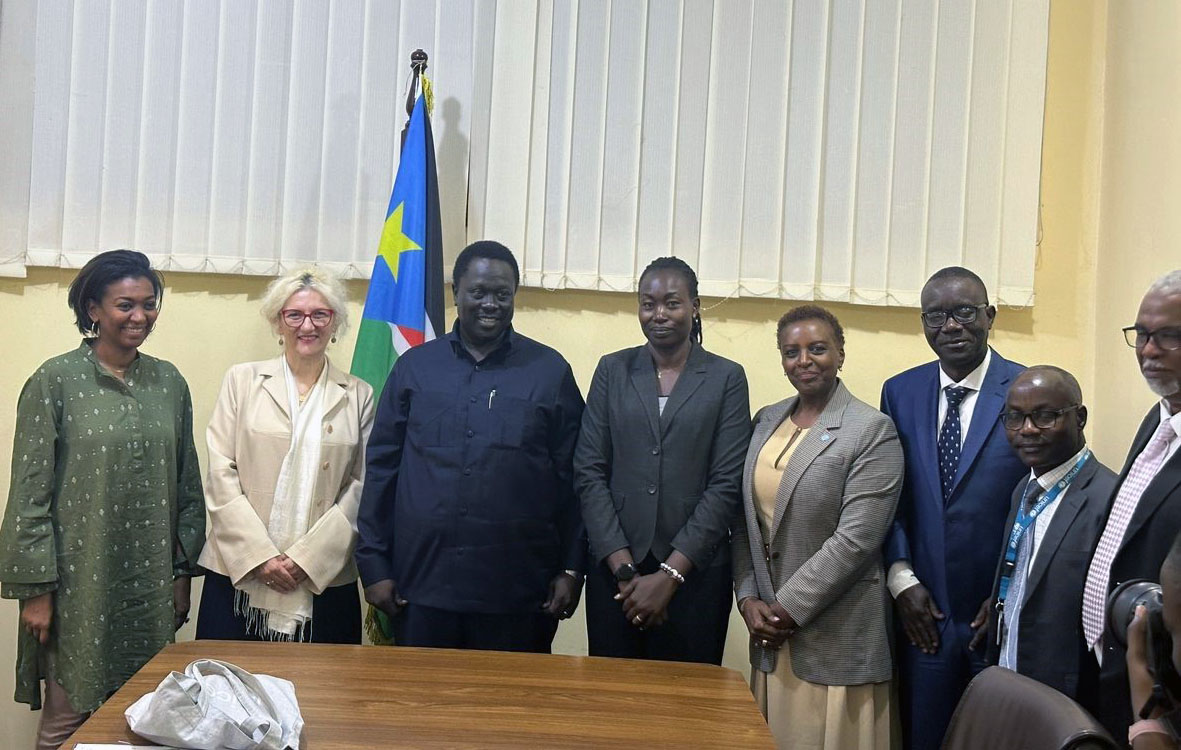
<p>No nation can tackle these challenges in isolation. The launch of the Initiative was bolstered by a strong message of solidarity from the World Health Organization (WHO) – Republic of South Sudan.</p>
<p>The WHO has been a long-standing partner of the Ministry, providing technical guidance, logistical support, and global best practices. At the launch, the WHO Country Representative, <strong>Dr. Humphrey Karamagi</strong>, took the stage to reiterate the organization's commitment.</p>
<p><strong>"It is really an important first step in the partnership to give care to the people of South Sudan,"</strong> Dr. Karamagi remarked, addressing the delegates. <strong>"Safe, dignified, and quality care is the right of each mother and newborn."</strong></p>
<p>Dr. Karamagi’s presence highlighted the alignment between the Ministry’s national goals and global health standards. He spoke specifically on the continuity of technical and operational support. This includes:</p>
<ul>
<li><strong>Training Guidelines:</strong> WHO will assist in rolling out the latest clinical guidelines for emergency obstetric and newborn care.</li>
<li><strong>Surveillance:</strong> Supporting the Ministry in tracking maternal deaths to understand the causes and prevent recurrence (Maternal Death Surveillance and Response - MDSR).</li>
<li><strong>Operational Logistics:</strong> Assisting in the complex logistics of moving supplies to remote areas.</li>
</ul>
<blockquote>
<p>"The Ministry of Health is working to address its role by harnessing partnerships, focusing on equity, and doing what it can to make sure that mothers and newborns survive and thrive," Dr. Karamagi added, signaling a collaborative path forward.</p>
</blockquote>
<h2> </h2>
<h2>Deep Dive: The Human Impact of the Initiative</h2>
<p>To understand the necessity of this initiative, one must look past the policy jargon and see the human lives it intends to save.</p>
<p>Consider the hypothetical but all-too-common scenario of a young mother in a remote village in Upper Nile. When labor begins and complications arise, her family faces a terrifying calculus. The nearest clinic is hours away by foot. The roads may be impassable. If she reaches the clinic, will there be a midwife? Will there be power? Will there be blood available if she hemorrhages?</p>
<p> </p>
<p>The <strong>Ministerial Initiative on Maternal and Newborn Health</strong> is designed to change the answers to these questions.</p>
<ol>
<li>By Building Resilience, the initiative aims to ensure that even if the roads are flooded, a boat ambulance or a locally positioned skilled attendant is available.</li>
<li>By Prioritizing Equity, it ensures that her village is not forgotten on the health map.</li>
<li>By Saving Lives, it ensures that the clinic she reaches is stocked with oxytocin and staffed by a trained professional.</li>
</ol>
<p> </p>
<p>The initiative also places a heavy emphasis on the <strong>newborn</strong>. Neonatal mortality remains high, often due to infections or breathing difficulties at birth. The initiative integrates newborn care into maternal care, ensuring that babies are not just delivered, but are resuscitated if necessary, kept warm, and protected from infection immediately.</p>
<h2> </h2>
<h2>The Implementation Roadmap: From Summit to Grassroots</h2>
<p>The inauguration at the Summit is the "start line," not the finish line. The Ministry has outlined a phased implementation strategy that will roll out over the coming months and years.</p>
<p> </p>
<h3>Phase 1: Assessment and Mobilization (Months 1-6)</h3>
<p>The immediate next steps involve a rapid assessment of current facility capabilities in the priority zones. The Ministry will deploy teams to audit equipment, staffing levels, and supply chain bottlenecks in the most underserved counties. Simultaneously, the Ministry will mobilize funding from the national budget and donor partners to front-load the procurement of essential life-saving commodities.</p>
<p> </p>
<h3>Phase 2: Capacity Building and Deployment (Months 6-12)</h3>
<p>This phase focuses on the workforce. It involves:</p>
<ul>
<li><strong>Refresher Training:</strong> conducting intensive workshops for current midwives and nurses on the new "Save Lives" protocols.</li>
<li><strong>Task Shifting:</strong> Training community health workers to identify danger signs early and facilitate rapid referral.</li>
<li><strong>Deployment:</strong> Incentivizing skilled staff to relocate to rural areas through improved housing and hardship allowances, a key component of the Equity pillar.</li>
</ul>
<p> </p>
<h3>Phase 3: System Hardening and Expansion (Year 2 onwards)</h3>
<p>The focus will shift to infrastructure—upgrading facilities to be flood-resistant, installing solar power for 24/7 lighting (essential for night deliveries), and integrating the MNH data into the national Health Management Information System (HMIS) for real-time monitoring.</p>
<h2> </h2>
<h2>Voices from the Summit</h2>
<p>The reaction to the announcement at the National Health Summit was overwhelmingly positive, though stakeholders acknowledged the challenges ahead.</p>
<blockquote>
<p><strong>Dr. Ajak</strong>, a County Health Director from a rural region, expressed cautious optimism: "For too long, we have felt cut off. When the rains come, we are on our own. Hearing the Minister speak about 'Resilience' and specific support for hard-to-reach areas gives us hope. We are ready to work, we just need the tools."</p>
</blockquote>
<blockquote>
<p><strong>Sister Mary</strong>, a senior midwife attending the summit, highlighted the importance of the 'Save Lives' pillar: "I have delivered thousands of babies. The heartbreak of losing a mother because of a lack of simple medicine is something you never get used to. This initiative puts the medicine in our hands. That is everything."</p>
</blockquote>
<p>International partners also welcomed the clear strategic direction. By clearly defining the four pillars, the Ministry provides a framework for donors to align their funding, preventing duplication of efforts and ensuring resources go where they are needed most.</p>
<h2> </h2>
<h2>The Role of Community and Culture</h2>
<p>A critical aspect of the initiative, underscored by Hon. Sarah Cleto Rial, is the engagement of the community. Healthcare does not happen in a vacuum; it happens within the fabric of society.</p>
<p>The initiative calls for a robust engagement with:</p>
<ul>
<li><strong>Traditional Birth Attendants (TBAs):</strong> While the goal is institutional delivery, TBAs remain influential. The initiative seeks to partner with them, redefining their role as key community advocates who encourage women to go to clinics and support them during the process, rather than conducting deliveries themselves.</li>
<li><strong>Male Champions:</strong> Encouraging men to support their wives' health, facilitate transport, and participate in family planning and child health decisions.</li>
<li><strong>Civil Society:</strong> Utilizing local NGOs and women's groups to hold the system accountable and ensure the "Equity" pillar is being realized on the ground.</li>
</ul>
<h2> </h2>
<h2>Challenges and Mitigation</h2>
<p>The Ministry remains realistic about the hurdles. South Sudan’s infrastructure deficit, economic constraints, and sporadic inter-communal violence pose significant risks to implementation.</p>
<p>However, the <strong>Resilience</strong> pillar is specifically designed to mitigate these risks. By decentralizing care and empowering local health facilities, the system becomes less dependent on the central capital. Furthermore, the strong partnership with WHO and other agencies provides a safety net of technical and logistical support that can bolster the government's efforts during crises.</p>
<p>The Minister also emphasized transparency. Progress on the initiative will be tracked, and data will be shared at future health summits. This accountability mechanism is vital for maintaining trust with both the public and the international community.</p>
<h2> </h2>
<blockquote>
<h2>Conclusion: A Promise for the Future</h2>
<p>As the 2025 National Health Summit continues, the launch of the Ministerial Initiative on Maternal and Newborn Health stands out as a beacon of intent. It is a declaration that the loss of life during childbirth is not an inevitability to be accepted, but an injustice to be corrected.</p>
<p>The words of Hon. Sarah Cleto Rial resonate as a call to action for every sector of society: government, partners, communities, and health workers.</p>
<p>"We are building a South Sudan where the cry of a newborn is a sound of pure joy, not anxiety," the Minister concluded. "We are building a system where every mother sees her child grow. This is our duty, this is our plan, and together, we will achieve it."</p>
<p>The Ministry of Health invites all citizens and partners to rally behind this initiative. The path to Universal Health Coverage and a healthier nation begins with the safety of our mothers and the health of our children.</p>
</blockquote>
<h3>Key Takeaways of the Initiative</h3>
<table cellspacing="0" style="border-collapse:collapse; width:624px">
<tbody>
<tr>
<td style="background-color:#f8fafd; border-bottom:1px solid black; border-left:1px solid black; border-right:1px solid black; border-top:1px solid black; vertical-align:top; width:208px">
<p><strong>Pillar</strong></p>
</td>
<td style="background-color:#f8fafd; border-bottom:1px solid black; border-left:none; border-right:1px solid black; border-top:1px solid black; vertical-align:top; width:208px">
<p><strong>Core Objective</strong></p>
</td>
<td style="background-color:#f8fafd; border-bottom:1px solid black; border-left:none; border-right:1px solid black; border-top:1px solid black; vertical-align:top; width:208px">
<p><strong>Key Actions</strong></p>
</td>
</tr>
<tr>
<td style="background-color:#f8fafd; border-bottom:1px solid black; border-left:1px solid black; border-right:1px solid black; border-top:none; vertical-align:top; width:208px">
<p><strong>1. Save Lives</strong></p>
</td>
<td style="background-color:#f8fafd; border-bottom:1px solid black; border-left:none; border-right:1px solid black; border-top:none; vertical-align:top; width:208px">
<p>Prevent avoidable deaths through clinical excellence.</p>
</td>
<td style="background-color:#f8fafd; border-bottom:1px solid black; border-left:none; border-right:1px solid black; border-top:none; vertical-align:top; width:208px">
<p>Emergency obstetric protocols, commodity security (medicines), skilled birth attendants.</p>
</td>
</tr>
<tr>
<td style="background-color:#f8fafd; border-bottom:1px solid black; border-left:1px solid black; border-right:1px solid black; border-top:none; vertical-align:top; width:208px">
<p><strong>2. Build Resilience</strong></p>
</td>
<td style="background-color:#f8fafd; border-bottom:1px solid black; border-left:none; border-right:1px solid black; border-top:none; vertical-align:top; width:208px">
<p>Create a system that survives shocks (climate/conflict).</p>
</td>
<td style="background-color:#f8fafd; border-bottom:1px solid black; border-left:none; border-right:1px solid black; border-top:none; vertical-align:top; width:208px">
<p>Flood-resistant clinics, mobile health units, supply chain redundancy.</p>
</td>
</tr>
<tr>
<td style="background-color:#f8fafd; border-bottom:1px solid black; border-left:1px solid black; border-right:1px solid black; border-top:none; vertical-align:top; width:208px">
<p><strong>3. Advance UHC</strong></p>
</td>
<td style="background-color:#f8fafd; border-bottom:1px solid black; border-left:none; border-right:1px solid black; border-top:none; vertical-align:top; width:208px">
<p>Ensure financial protection for families.</p>
</td>
<td style="background-color:#f8fafd; border-bottom:1px solid black; border-left:none; border-right:1px solid black; border-top:none; vertical-align:top; width:208px">
<p>Free maternity care, community support funds, integration of services.</p>
</td>
</tr>
<tr>
<td style="background-color:#f8fafd; border-bottom:1px solid black; border-left:1px solid black; border-right:1px solid black; border-top:none; vertical-align:top; width:208px">
<p><strong>4. Prioritize Equity</strong></p>
</td>
<td style="background-color:#f8fafd; border-bottom:1px solid black; border-left:none; border-right:1px solid black; border-top:none; vertical-align:top; width:208px">
<p>Reach the unreached and underserved.</p>
</td>
<td style="background-color:#f8fafd; border-bottom:1px solid black; border-left:none; border-right:1px solid black; border-top:none; vertical-align:top; width:208px">
<p>Data-driven allocation to rural areas, culturally respectful care, targeting "blind spots."</p>
</td>
</tr>
</tbody>
</table>
<h3> </h3>
<h3>About the National Health Summit</h3>
<p>The National Health Summit is the premier annual gathering of health sector stakeholders in South Sudan. It serves as a platform to review progress, identify challenges, and set the strategic direction for the nation’s health agenda. The 2025 Summit has placed a special emphasis on primary health care, equity, and the acceleration of health goals toward 2030.</p>
<p> </p>
<h3>About the Ministry of Health - South Sudan</h3>
<p>The Ministry of Health is the government body responsible for the oversight, planning, and delivery of healthcare services in the Republic of South Sudan. Its mission is to provide an integrated, inclusive, and sustainable health system that improves the health and well-being of all citizens.</p>